

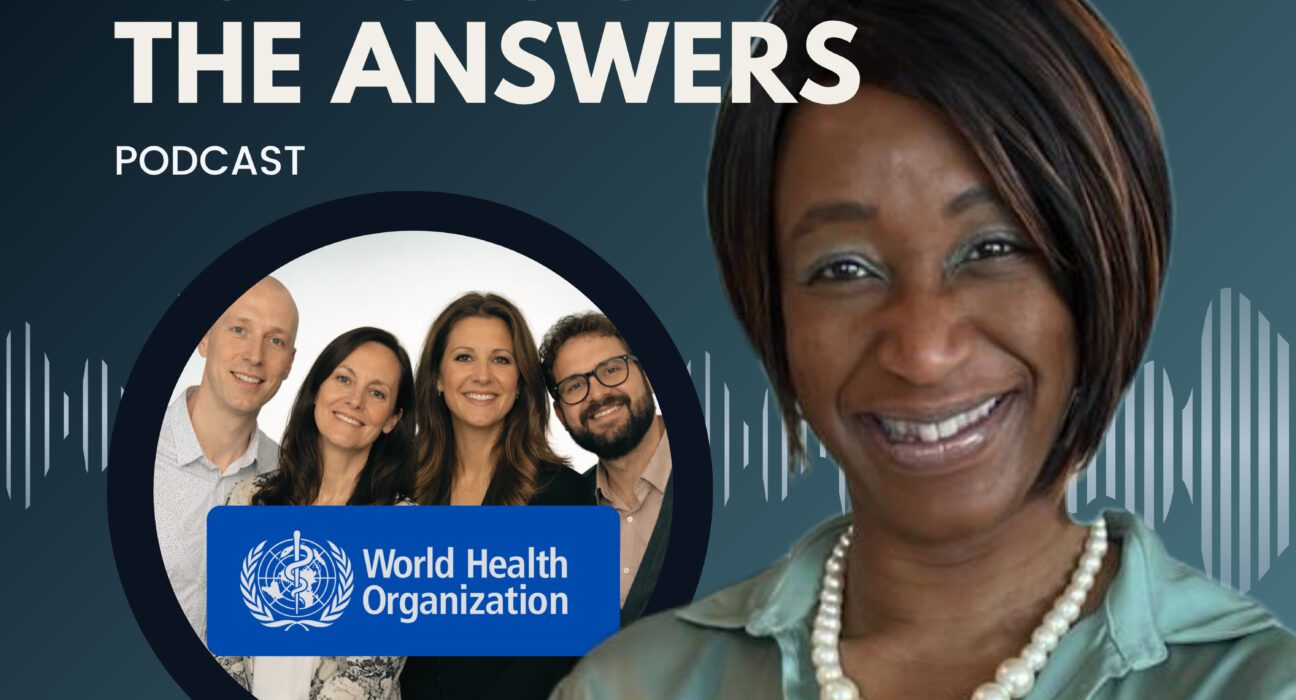
WHO Long COVID Exclusive – to mark International Long Covid Awareness Month 2026
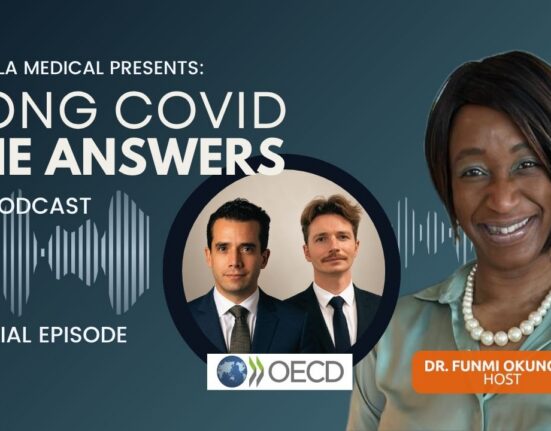
In this episode, Dr. Funmi Okunola speaks with experts from the World Health Organization about the ongoing impact of long COVID. Dr. Maria Van Kerkhove and Dr. Jamie Rylance discuss the continued global burden of the condition, stressing that COVID-19 is not over and highlighting the need for better recognition, research, and rehabilitation. The conversation explores challenges in defining and diagnosing long COVID, gaps in care, and the importance of patient-centered approaches. Additional insights from WHO Europe experts emphasize community engagement, tackling misinformation, and amplifying patient voices. Together, they provide a comprehensive overview of how global health systems are responding to long COVID and the work still needed to support those affected.
Guest – World Health Organization
Note: The podcast has no bias. All conflicts of interest are highlighted with individual guests.
Podcast Overview:
Key Points of the Podcast
In this episode, Dr. Funmi Okunola speaks with experts from the World Health Organization about long COVID as an ongoing global health challenge affecting an estimated 400 million people. Dr. Maria Van Kerkhove emphasizes that COVID-19 is not over, while Dr. Jamie Rylance highlights gaps in diagnosis, care, and research. The discussion explores the need for clearer definitions, better clinical pathways, and holistic, patient-centered care. WHO experts also stress the importance of community engagement, tackling misinformation, and amplifying patient voices to improve awareness, reduce stigma, and drive global action and policy change.
DISCLAIMER: The information in this podcast is provided for informational purposes only. You should not use any information discussed in this podcast and related materials to make medical or healthcare related decisions. Always consult a your physician or other qualified health care provider with regards to diagnosing managing your medical condition. Any medications or treatments, including any discussed in this podcast, should be initiated and managed by a qualified health care professional.
Podcast Transcript:
WHO Long Covid Exclusive
[00:00:00] Dr Funmi Okunola: Welcome to the podcast, special of Long COVID, The Answers. My name is Dr. Funmi Okunola and we are recording this in March, 2026 as part of international long COVID Awareness Month. Over the past few days, I interviewed some key people at the World Health Organization who care about the recognized international public health emergency of long COVID.
[00:00:24] Dr Funmi Okunola: The World Health Organization is the United Nations specialized organization for global public health. Its job is to coordinate international health efforts, set medical standards, and help countries in health emergencies. Over 190 countries, which it terms member states are part of the WHO, all of the people we will interview for this podcast, special work tirelessly to keep us safe during the pandemic.
[00:00:54] Dr Funmi Okunola: Dr. Maria Van Kerkhove is the director of the Department of Epidemic and Pandemic Threat Management at the World [00:01:00] Health Organization, an epidemiologist by training. Her career spans over 25 years of international pandemic management of a multitude of pathogens, including most recently SARS-CoV-2 H1N1 Influenza, MERS -Coronavirus
[00:01:16] Dr Funmi Okunola: Welcome, Maria. Thank you so much for having us. Dr. Jamie Rylance is the clinical lead for long COVID and part of the clinical management team of the health emergency program at the World Health Organization. Dr. Rylance was a consultant, respiratory physician working in the UK NHS, and formerly an associate professor of respiratory medicine and global health at the Liverpool School of Tropical Medicine with experience of teaching, research and investigation of tropical disease in lower middle income countries.
[00:01:48] Dr Funmi Okunola: Welcome, Jamie. Pleasure to be here. Thanks, Maria, if we start with you, how would you describe the World Health Organization? What is its relevance [00:02:00] today? Well, I mean, it’s a great question.
[00:02:02] Dr Funmi Okunola: You, you talked about it a little bit in your introduction, but essentially we are part of the United Nations that deals with health. We bring people, partners, nations, people everyone, everywhere. Together to promote health, to keep the world safe, to , serve vulnerable. And what we try to do is we try to turn science into action, science, into prevention, , and really improve the lives of people all over the world.
[00:02:29] Dr Funmi Okunola: so we bring the best minds together to tackle some of the world’s biggest health challenges. Jamie, what do you think the World Health Organization represents? I think it recognizes a number of things. Firstly, health in its complete sense. So not just not having a disease, but able to have a fulfilling and full life.
[00:02:52] Dr Funmi Okunola: it recognizes health as a fundamental, right. Something that’s non-discriminating, something that’s universal. , and [00:03:00] it’s also a pillar of. Global peace, global stability without health that sustainable peace is really not achievable. But I think it stands also for cooperation both at individual levels and at the level of the member states, which you mentioned.
[00:03:15] Dr Funmi Okunola: and we are here really to support governments, their duty to their people to attain the highest level of health. Gosh, those are both excellent answers. Thank you. Maria, you were very much the who’s face to the media during the pandemic. Could you please explain your role to our audience? A lot of whom are non-medical.
[00:03:36] Dr Funmi Okunola: Well, thanks for actually not introducing me in the beginning as the face of COVID. That’s one of the least my least favorite things as people to say, I’m an infectious disease epidemiologist, and my role before COVID. Was the MERS-Coronavirus technical lead. And when we first learned of this cluster of pneumonia, of unknown etiology in Wuhan China in late December, 2019 , we set up an [00:04:00] emergency team, which we call our incident management team.
[00:04:03] Dr Funmi Okunola: And as part of that, I was the health operations and technical lead. My job was to work with the people that we have here at WHO and all over the world to turn science, to turn data, to turn knowledge into evidence-based guidance, into strategies. I worked with Jamie during part of COVID, ’cause he joined us during that time.
[00:04:24] Dr Funmi Okunola: But I worked with the clinical management teams, infection prevention and control risk communication, community engagement, surveillance, diagnostics, basically to tell the world. What they needed to do to identify the patients, to care for patients, to prevent infections, to save lives, and part of that was to answer questions for the media.
[00:04:43] Dr Funmi Okunola: It was actually a small portion of the job that I had. And over the course of the three, four years, I’ve done hundreds of conferences with our director, general Dr. Tedros and our executive director at the time, Dr. Mike Ryan. It was an absolute privilege. To do those press conferences [00:05:00] to essentially answer what we know, what we knew what we didn’t know, what we were doing to find out, and really importantly, what it meant for you, the audience who was listening to us, whether it was journalists or presidents or parents.
[00:05:16] Dr Funmi Okunola: you know, how do you keep you and your loved ones safe? Jamie, could you please explain to our audience your role at the World Health Organization and how you represent people with long COVID? Sure. Well, I think at the general level, we bring together people, stakeholders, anyone who’s involved in improving the life of
[00:05:37] Dr Funmi Okunola: people. and we try and keep a science-based response we produce a lot of guidance as a result that brings the people and the science together. my job in WHO is a bit more clinical, so it’s where the public aspect meets individuals and patients as you. Would call them if they were admitted to a hospital, for example.
[00:05:58] Dr Funmi Okunola: My job’s less about the [00:06:00] prevention and more about the response. And as part of the safe and scalable care in the emergencies program, often responding to acute episodes of infectious disease and we’ve mentioned COVID-19, but. Understanding that although I’m a hospital doctor by training health and, patient journeys start well before that and finish as long haulers know well after that
[00:06:23] Dr Funmi Okunola: and so really making sure that we have a response that is tailored to an individual as best we can from this very global level but using all the expertise we can. Patients, professionals, organization, everybody. I think from the science point of view, we are, a source of honesty. I think we are honest about what we don’t know.
[00:06:47] Dr Funmi Okunola: We support the scientists, and the global science community to fill in the gaps. and I think from long COVID, there’s been huge amount of effort and substantial improvements in breakthroughs. but then [00:07:00] subsequent to that, well, what do you do about it?
[00:07:02] Dr Funmi Okunola: So we issue guidance about how to put that science into action to make people’s lives better.Maria, you and I met in November, 2025 at the UBC Center of Disease Control, global Health Security Summit in Vancouver, Canada. You were the keynote speaker there, and as a big, long COVID advocate, I was really inspired by your speech as your opening line was
[00:07:23] Dr Funmi Okunola: “we are not really post COVID. We are post COVID crisis, and it’s still very much with us. And I think we really need to address this as I think there is a collective amnesia about wanting to put this in the past, and it’s really not in the past.” I’m quoting you there, can you please elaborate on that statement?
[00:07:42] Dr Funmi Okunola: Yeah, I think many people want to think we’re done with COVID. that COVID is over. It was a very painful part of our lives. many of us lost loved ones, trajectories of people’s lives changed. Livelihoods were altered and I think many people, because of the trauma that everyone went through, really wants to put that in the [00:08:00] past.
[00:08:00] Dr Funmi Okunola: But COVID is still very much with us. the virus, SARS CoV-2 is still circulating and circulating in all countries, certainly not at the level that it was during the crisis of COVID, but we still have people with acute infection, acute disease, and we have many, many people with long COVID. And so for us, for the rest of the world, for governments, for ministries of health, this is not over.
[00:08:24] Dr Funmi Okunola: I think it’s important for us as the World Health Organization, as the World’s health organization, working with governments to keep people safe. We need to keep attention on these threats that we currently face because they’re still very much with us, but also everything that we’ve done for COVID is important
[00:08:40] Dr Funmi Okunola: for the next one, I think. I also want to make sure that for those who are suffering from long COVID, that they’re not forgotten. The legacy of COVID cannot be just death and devastation. It needs to be what we’re doing to make these systems better, to make sure that the next time we are better prepared and that we still [00:09:00] continue to care for those who are suffering from long COVID, who are suffering from acute infection, who are still dying from COVID.
[00:09:07] Dr Funmi Okunola: Thank you so much for that statement. I know it will mean a,a huge, thing to all of the people suffering from long COVID out there. thank you, for saying that. So Jamie, long haulers, feel forgotten, ignored, stigmatized and marginalized by the medical profession and the non-medical public as a clinical lead for long COVID
[00:09:27] Dr Funmi Okunola: at the WHO, what are you doing and who are you working with to combat this situation? Yes. So still many years on, it’s similar issues that we’re facing and raising awareness in all of the people that you mentioned is really important. The recognition, as you say that neither the pandemic nor, COVID-19 are over for any of us really
[00:09:52] Dr Funmi Okunola: and things, people and health systems can be quite messy and, difficult to navigate. [00:10:00] Quite inefficient, and one of the things that we are trying to do is improve the navigation of those systems, improve how patients understand their disease, how doctors understand their diseases, and how researchers are working to improve treatments.
[00:10:14] Dr Funmi Okunola: For example, knowing where do I go communicating the entry points to healthcare and seeing what models work in different places, because clearly one size does not fit all. When we’re talking about members. But really what can we learn from each other? And that’s most obvious sometimes at the research community level where everyone builds on everyone else’s success.
[00:10:37] Dr Funmi Okunola: But pulling together the different aspects, parts of treatment, the rehabilitation, mental health aspects. Laboratory science, science and learning from best practice. And so we try to bring scientists together within that context to talk to each other and, to set up some simple tools for education, example for doctors and patients, [00:11:00] to help the scientists underpin, their work by harmonizing the data and the definitions and lots of technical work, that needs to underpin that, but also.
[00:11:10] Dr Funmi Okunola: Certainly with our colleagues in the, regional office in Europe doing some of the research, looking at cohort studies, what are patients suffering with now? from the later infections from COVID, not from the early pandemic, from when our data, mostly come and now putting all that people in the science together, again, coming up with guidelines.
[00:11:31] Dr Funmi Okunola: as part of our, living guideline on, COVID-19, which includes rehabilitation and other treatment aspects, and also supporting other disease guidelines, which, are associated with COVID-19 and long COVID, but aren’t always ostensibly about them. So really bringing some sense that this is a patient need a people’s needs that can be asked and answered across a bigger range of products.
[00:11:58] Maria: Oh, thank you. I really feel the [00:12:00] passion with both of you that you are rooting for long haulers out there.
[00:12:04] Maria, on March the 11th 2020, the who, director Journal Dr. Tedros Ghebreyesus declared COVID-19 A Pandemic. That’s just over six years ago. We now have the public health crisis of an estimated 400 million people worldwide, suffering from long COVID as a result of SARS CoV-2 two infection without a cure for the disease
[00:12:25] Dr Funmi Okunola: and a medical profession that is not providing adequate training for diagnosis and rehabilitation. What is the WHO’s role in managing this? So we first started meeting patients with long COVID or advocates for patients with long COVID in August, 2020. And what they asked for with our director general who came to that meeting with me, with Janet Diaz, who’s the head of the clinical team, and they asked for three things.
[00:12:52] Dr Funmi Okunola: They asked for recognition, they asked for research, and they asked for rehab. And that first one on that recognition. [00:13:00] Was so critical and remains critical because this is happening. This is something that is real. WHO is making sure that there are strong case definitions, and that may sound very simple, but when we say long COVID people mean different things in different countries.
[00:13:15] Dr Funmi Okunola: For just us to have an understanding of what. The scope of this real issue is we need to have the medical community talking about the same thing. We need to make sure that we have treatment for people who are suffering from long COVID, dealing with many different parts of the body. And Jamie touched upon that in his previous answer, and we need much more research.
[00:13:36] Dr Funmi Okunola: There’s more that we understand, of course, but there’s far more work to do to better understand what is actually happening to guide the treatment options, to drive, rehabilitation. And so for us, one of the major things that we do is, one, is we keep up the recognition, we keep up, the awareness of this, because this is real.
[00:13:55] Dr Funmi Okunola: We advocate for this. We are constantly looking for funding to [00:14:00] support research, to support cohort studies. Just have the investment to better understand this, and we’re making sure that we turn whatever evidence we have into guidelines, into guidance to keep people safe. So it’s turning that data, that knowledge from, knowledge knowhow into how to.
[00:14:16] Dr Funmi Okunola: And that convening power is really important. Just to be heard, is important and what Jamie was mentioning is we don’t only work with clinicians, we work with patients, we work with patient groups to make sure that what we do advise is applicable, is acceptable, is implementable. That we can help as many people as we possibly can.
[00:14:35] Dr Funmi Okunola: So for us, this isn’t over. and I wanna make that really clear. You may not hear about us talking about long COVID every time. We certainly don’t get questions about it like we used to at the press conferences. But this is something that is a priority for us and we really do need more attention to this by governments.
[00:14:51] Dr Funmi Okunola: We need more funding for this to continue to better understand it, and really importantly, to have better guidelines to support patients. [00:15:00] Oh, thank you.
[00:15:04] Dr Funmi Okunola: Jamie privately, you and I have discussed the need for a consensus definition of the post COVID syndrome. Could you explain what this is and why it’s important? Yeah, thanks. So we’ve used a few different terms to try and describe the same thing even on this interview. post COVID condition, long haulers
[00:15:24] Dr Funmi Okunola: long COVID, and that’s just in the use of the language, what underpins that and how you identify people. People that are suffering from it, people that are at risk from it, or people that might be treated for it. We all really need to start speaking the same language. And WHO were really early, I think, to develop the case definitions for adults and for children.
[00:15:47] Dr Funmi Okunola: They were pragmatic. They were broad, they were based on symptoms. If you had symptoms of it. You could, have a diagnosis of long COVID or post COVID condition, as we would [00:16:00] call it. Follow that through. I think there’s an increased understanding now of different patterns, different subtypes of disease.
[00:16:08] Dr Funmi Okunola: Clearly patients are all different, but there are increased recognitions of clusters of things that can be recognized. Recognize scientifically and medically because they have unique treatments. and there’s equally an increased recognition of the post-acute sequela, meaning the things that happen after COVID infection that are probably not captured
[00:16:31] Dr Funmi Okunola: if we just talk about symptoms, and we’ve talked about some of the organ dysfunction and the damage that the virus and infection can do to your body, don’t capture that well in the current definitions. So there’s a challenge. The definitions need to be specific because we have to know what we’re talking about, but they have to be inclusive.
[00:16:50] Dr Funmi Okunola: They have to make sure that everyone is counted. They have to be stable to be useful because everyone needs to know where they are, but they also have to respond to the changing [00:17:00] landscape over time. And so I think, that, now is a time when we are reconsidering whether the case definition from four years ago now, five years ago, is still the best it can to make sure that everyone’s included, everyone’s talking the same language, and together we can, face
[00:17:18] Dr Funmi Okunola: the medical and the research and all the other social challenges that we need to face. Yeah. very much endorse that. and we’ve talked about how the virus really affects every organ in the body and it really is impacting onthe whole community. we are seeing increases in type two diabetes and kidney disease and heart disease from, SARS-CoV-2 infection, probably repeated infection, as well as long COVID
[00:17:45] Dr Funmi Okunola: and then people are still hospitalized. with COVID and come out with organ damage. So there’s all these different effects that the virus has that’s what you are trying to get, isn’t it, in that, new consensus definition you are working on. Yeah, [00:18:00] exactly right. Yeah. Great.Maria, why let’s, Maria, why is International long COVID and Awareness Month important?
[00:18:07] Dr Funmi Okunola: Well, it’s important for, I think, three reasons from my point of view. One is that we keep up awareness, we keep up the attention to what is happening and what so many people are suffering from. For all the reasons that we’ve talked about in this podcast, I think it’s important because people need to feel heard, that their voices are heard, that their voices are important, what they’re going through is important.
[00:18:33] Dr Funmi Okunola: The third reason is bottom line is we’re all people. we’re somebody’s parent or child or friend, or aunt or uncle, and we see what it’s like to watch one of our loved ones suffer, and we all wanna do whatever we can to keep our loved ones safe and healthy and happy. and so the awareness
[00:18:53] Dr Funmi Okunola: about this is important, and again, I really wanna reiterate that at the World Health Organization, this is important to [00:19:00] us. as Jamie said in the beginning, we look at the whole health of the individual. we look at their mental health, we look at everything surrounding their ability to lead healthy lives.
[00:19:09] Dr Funmi Okunola: and we take that very seriously. We are here at the World Health Organization, not because we have to be, because we want to be, and we get to work with people like you. I get to work with people, experts, from all over the world. again, to bring the best minds together to solve these really, really complex problems and that’s a privilege.
[00:19:29] Dr Funmi Okunola: Jamie. What does international long COVID Awareness month mean for you? I’ve been thinking about this and I think it addresses for yous.
[00:19:41] Dr Funmi Okunola: One, Maria has already mentioned unheard people. Advocacy and awareness of those unheard voices is still so important and unanswered questions with long COVID still left without the answers, still the stigma that we’ve mentioned that really needs to be addressed. [00:20:00] Underfunded needs to be a rallying point for funding and to make sure it’s high on the agenda of everyone, but particularly people that can help drive improvements in care, in research, and those things we’ve talked about.
[00:20:13] Dr Funmi Okunola: And lastly, untreated because I think there’s an under recognition of symptoms and the access to care that people need. It needs to be individualized, but they need to recognize it and need to be straightforward pathways to get that care that they need and to support the individuals and the family and community around them.
[00:20:34] Dr Funmi Okunola: Thank you both for joining us today. a, really powerful interview actually. And, I really feel from this interview that, the World Health Organization is doing so much to help, long haulers. you know, you like a swan, but busily sort of working those feet under the water furiously as you glide along.
[00:20:54] Funmi: yeah.
[00:20:55]
[00:20:55] Funmi: really feel,
[00:20:56]
[00:20:56] Funmi: uplifted and inspired by what you’ve both said today. Thank you [00:21:00] for everything that you do and, and for keeping us safe during the pandemic,
[00:21:04] Funmi: And I know you’ll do the same for the pandemics to come.
[00:21:07]
[00:21:07] Funmi: thank you for the wonderful work that you both do.
[00:21:11] Funmi: Thank you. Very welcome. And thank you.
[00:21:13] Dr Funmi Okunola: Cristiana, would you like to introduce yourself? Thank you very much for this opportunity. My name is Cristiana Salvi and I’m the regional advisor for community Resilience and protection in the health security division at WHO Regional Office for Europe, based in Copenhagen. So Cristiana, what is community resilience and protection and health security at the World Health Organization?
[00:21:39] Dr Funmi Okunola: Community resilience and protection, or the way we call it CRP, is about putting communities at the core of emergency management. So health, security, not just as beneficiaries, but as partners and communities, we need to realize very clearly, they are not passive [00:22:00] recipients. They are agents of their own protection.
[00:22:03] Dr Funmi Okunola: These approaches quickly become central to health security is now one of the main building blocks of the preparedness 2.0 strategy and action plan that all member states in WHO European region signed off at the end of 2024, and that means that countries are expected to build emergency health system that are truly centered on people’s needs.
[00:22:30] Dr Funmi Okunola: so what role did this job play during the pandemic for you? It was critical and COVID-19 made that very clear. At the time, A CRP Community Resilience and Protection wasn’t very established in the European region. There was not much documentation and not many concrete examples we could draw
[00:22:52] Dr Funmi Okunola: from what the pandemic showed us is that it’s not enough to deliver the vaccines, the treatments, the [00:23:00] text. What really matters is that people. Understand them, trust them, access them, and use them In simple terms, what matters is not vaccines, but vaccination and even more that communities have the knowledge and skills to own their solution and themselves to deliver the services and intervention that are meaningful for them.
[00:23:23] Dr Funmi Okunola: When we engage community and build on their strengths and overall on the trust that they have with each other. We see much stronger acceptance and uptake of protective measures. That’s really, really powerful. Thank you. tell us about R-C-C-I-M. What does this acronym stand for? This is a pretty complex acronym that stands for Risk Communication, Community Engagement and Infodemic Management, and is central to community resilience and protection.
[00:23:58] Dr Funmi Okunola: This area [00:24:00] only work well when they are together. Risk communication is about providing timely, trusted information based on community insight. Community engagement is working together with communities to co-shape and co-deliver intervention. And infodemic management is about addressing false information and building resilience, , to it.
[00:24:22] Dr Funmi Okunola: And together they empower people to take informed decision to protect their health In the European region, , traditional risk communication had been. Stronger and more developed com community engagement info management. Were lagging a little bit behind, so throughout these years we have been working with countries to build these capacities and create these three disciplines to make really one learning also from the recent emergencies that have hit the European region.
[00:24:57] Dr Funmi Okunola: This was your development, wasn’t it? [00:25:00] I understand. What inspired you to do this? well, I’ve been part of response and preparedness in health emergencies for the last, I would say 24 years. I’ve been working in the field for long years, and I’ve been deployed also in. That are different from countries in the European region, including in the African region in Asia.
[00:25:26] Dr Funmi Okunola: And I’ve been learning a lot from the experience of the community engagement. I would say that community engagement has been more solid in these areas, and we have been learning from this truth over time. But at the same time, COVID came up with our Single opportunity to understand that unless we engage community, we work together with them and not only for them during emergencies that we can truly control outbreaks.
[00:25:58] Dr Funmi Okunola: Do could R- [00:26:00] C-C-I-M be used to raise awareness of long COVID, and if so, how? Absolutely. WHO Europe estimates that around 36 million people in the region experienced long COVID between 2020 and 2022, and the Fed. There was less testing or no testing at all after That means that the real number is much higher.
[00:26:25] Dr Funmi Okunola: At the same time, long COVID is still a condition. Where evidence is evolving. So responding effectively also means learning from people’s lived experiences. That’s where R-C-C-I-M comes in. It helps about basically engaging patients, listening to them, their concerns, their needs, supporting health workers to have a dialogue with them based on empathy and help.
[00:26:52] Dr Funmi Okunola: Communities at large better understand and accept the condition. It also plays a very important role in reducing the [00:27:00] stigma and building trust. As knowledge continues to evolve.
[00:27:05] Dr Funmi Okunola: so R-C-C-I-M is really powerful, from your description and really necessary for long COVID advocacy, awareness and education. How can we implement this internationally in our countries, in our health services?
[00:27:23] Dr Funmi Okunola: So this month is extremely important because it gives visibility to a condition that is still not fully understood and consistently recognized. And one of the main thing is that it helps challenge stigma, which is a main barrier for people trying to access care while also validating their experience.
[00:27:44] Dr Funmi Okunola: And it’s also a key message for a decision maker to invest more in research, in diagnosis, and access to services. And importantly, it helps ensure that the patient voices are heard and included in policy and practice. [00:28:00] Wonderful. God, what a wonderful world would we be in if we could get everybody to successfully implement what you’ve created here.
[00:28:08] Dr Funmi Okunola: how has your department at the World Health Organization marked international long COVID awareness month? So we marked it by relaunching our myth buster on long COVID, and I’m going to explain what it is. We developed them launched on the 30th of January, which was the anniversary of the public health emergency for international concern to be declared on COVID.
[00:28:34] Dr Funmi Okunola: So we thought it was a very good opportunity and occasion to launch the myth buster and we are basically promoting the myth busters stronger during this month. So what are they? let me just say that misconceptions continue to hinder diagnosis, prevention, and care and rehabilitation. And with the support of the European Union, we have developed these MythBusters [00:29:00] that basically use social media assets to combine evidence-based information.
[00:29:05] Dr Funmi Okunola: with real patient stories in a nutshell, this is a very strong example of R-C-C-I-M in action. First of all, we worked with the Unity groups to really get their insights on what are the rumor the. false information circulating and what we want to address. And then we developed these evidence-based techniques to counter these myths, which are proven and successful in the context of infodemic management.
[00:29:37] Dr Funmi Okunola: We also expose the techniques that those that manipulate information use. So that people can believe in false information and this need because, so people are more equipped to use their critical judgment when they encounter these information. And at the end we also use this [00:30:00] patient stories. So stories that are.
[00:30:02] Dr Funmi Okunola: From people who have been living through long COVID so that they can foster trust and empathy, and they can really connect and truly connect with people at the human level.
[00:30:14] Funmi Okunola: Oh, thank you Cristiana. And yes, we at Long COVID, The Answers have connected with your department on that, and we’ve been sharing and promoting MythBusters on our website and social media.
[00:30:25] Funmi Okunola: So please,
[00:30:27] Dr Funmi Okunola:
[00:30:27] Funmi Okunola: listeners and watchers go and have a look and visit the World Health Organization website to see those
[00:30:33] Dr Funmi Okunola:
[00:30:33] Funmi Okunola: those MythBusters accounts.
[00:30:35]
[00:30:35] Funmi Okunola: okay, so.
[00:30:36] Funmi Okunola: Thank you
[00:30:37]
[00:30:37] Funmi Okunola: for all that you do, all that you’ve done to keep us safe. You’re doing some amazing, wonderful work and we truly appreciate it.
[00:30:47] Funmi Okunola: And thank you for everything that you and the World Health
[00:30:50]
[00:30:50] Funmi Okunola: Organization does for raising awareness of long COVID.
[00:30:54] Cristiana Salvi: Thank you so much for having me, and thank you so much for your work in spreading the [00:31:00] truth.
[00:31:01] Dr Funmi Okunola: Leo, would you like to introduce yourself? Sure. Thank you, and I’m pleased to join you. I’m Leo Palumbo and I’m the technical officer and community engagement in WHO Europe’s health security division.
[00:31:16] Dr Funmi Okunola: Leo, what is community engagement at the World Health Organization and what role do you play in this? WHO defines community engagement as the process of building relationships with community actors.
[00:31:30] Dr Funmi Okunola: And, we also, Moving that from something that, has been applied into emergencies like Ebola and, used in universal, health coverage to broader emergency response. I started with the World of Health Organization shortly before the. COVID-19 pandemic. so my role in terms of community engagement is, developing initiatives alongside health authorities to engage at risk and affected communities for an example, for COVID we set [00:32:00] up.
[00:32:01] Dr Funmi Okunola: Community engagements, initiatives, and eight different project, different member states, but essentially setting up projects to tailor the COVID to 19 response to realities faced by communities in those countries. Right. Yeah. So you had a real baptism of fire starting just before the pandemic. Indeed. So I’d like to quote one of your phrases, referring to your skills and experience, you describe yourself as making policy change happen by connecting marginalized groups to policy makers.
[00:32:35] Dr Funmi Okunola: Really powerful. Worldwide. There are 400 million people with long COVID. How can you realize this statement through your work at the World Health Organization? How I view it is, , if you look at a lot of the existing knowledge on tackling health equity, what you see is oftentimes marginalized groups are underrepresented in statistics.[00:33:00]
[00:33:00] Dr Funmi Okunola: And this essentially means that they. Can be invisible to policy makers because they, their needs aren’t always taken into account because they’re not counted for. So how I view community engagement in one sense is, making the invisible visible. So, to go back to the example that we’re here to talk about today on, long COVID.
[00:33:25] Dr Funmi Okunola: One of the things we did was, using patient stories. So a way to actually make visible what is the reality of someone who has long COVID. if you look at the policy perspective, it also means a couple of things. So one would be it’s important to set up
[00:33:43] Dr Funmi Okunola: mechanisms for communities to share their concerns, with health authorities. I think another thing, health authorities who are interested in along COVID would have to do is, map out who are the at [00:34:00] risk and affected communities that have unmet needs. So for long COVID, that might be, children, it also might be working with,
[00:34:08] Dr Funmi Okunola: organizations and groups that might not be the usual suspects in the health sector, like groups of people living with disabilities, even though the whole point is they should be usual suspects. ’cause you should be working with, groups who are traditionally left behind in order to, adjust their unmet health needs.
[00:34:28] Dr Funmi Okunola: Yeah, I, think we have a really big problem be with even getting health authorities to, acknowledge that long COVID, is an issue. So we are really starting from quite a way back. so how do you think we could implement the ideals that you, realize from an international viewpoint to a local one, how can we as long COVID advocates and people living with long COVID, try and really wake up our health authorities to the fact that we have [00:35:00] these needs?
[00:35:02] Dr Funmi Okunola: I do see some positive examples, our work, on long COVID is in partnership with the European Commission and the organization for economic, cooperation and developments. The European Commission has set up a network of experts on long COVID, and they also have an open stakeholder group.
[00:35:21] Dr Funmi Okunola: As part of those meetings, almost every meeting that I’ve been to, there’s been a patient representative. I think that’s one practical way. Let’s say if you were organizing a conference or event to incorporate lived experience, there are Other alternatives, that , could be looked into.
[00:35:40] Dr Funmi Okunola: One thing that we saw during COVID is some municipalities would set up, advisory boards. I would also say, this is probably a good practice from long COVID is also, patient groups. Patient groups and affected individuals have organized themselves. So, in many ways they join [00:36:00] together to fill, a need that’s not being met,
[00:36:03] Dr Funmi Okunola: And what needs to happen now is actually finding ways to, dedicate resources to, continue that work. But, The reason why I bring that up is something that I think that’s been very powerful that we’ve seen in other examples, most notably, the response to , to HIV, and AIDS that,
[00:36:22] Dr Funmi Okunola: having organized civil has made a big difference in terms of, both the access to treatments and also, having resources dedicated to research in that area. So. I think for long COVID because, it’s something that is an emerging issue. I don’t want to say new because many people have been, been living with it for a number of years, but it, there’s always a bit of a lag between policy responses.
[00:36:49] Dr Funmi Okunola: So for that reason, it would some time to catch up, but I do want to say that, there are some existing good practices and I think [00:37:00] that’s, let’s say local communities have to see what would make sense for their community, whether it’s writing to their local health authorities. Participation could also be along the lines of improve the patient pathway for specific health facility.
[00:37:16] Dr Funmi Okunola: How do. you help patients navigate, different services that they need. So I, I don’t think that there’d be a one size fits all solution, but, there’s definitely promising practices that can, help, both make patients, voices heard, and also, bring their reality into view.
[00:37:39] Dr Funmi Okunola: Thank you, Leo.
[00:37:41] Dr Funmi Okunola: Tell us about MythBusters and the role you played in realizing this initiative. thank you for asking about that. That’s something that’s, really close to my heart and I’m, really interested in. So the MythBuster series is, something that we worked on alongside, what [00:38:00] we at WHO Europe call an informal, working group.
[00:38:05] Dr Funmi Okunola: So with different representatives from patient groups affected communities, clinicians and rehabilitation specialists, we engaged in a process of finding out what are the most reoccurring myths. , then we did a prioritization exercise about what is the most harmful from them. And, then, WHO experts worked on,
[00:38:30] Dr Funmi Okunola: Debunking the myth. So using facts to, set the record straight. And we also worked on, Interviewing, people with lived experience who are involved in the informal working group in order to match stories with a myth. And the, the idea behind this was we want content in an online world that can be sticky.
[00:38:52] Dr Funmi Okunola: So you want content that is memorable. And, another thing that, I view as important in initiative is also starting with facts. [00:39:00] So oftentimes, rumors spread, and then when you try to dispel them, many people focus on the myth when you should actually focus on the fact and reminding people about the evidence-based information in order for that
[00:39:17] Dr Funmi Okunola: to be ingrained more in people’s memory. so as part of the exercise, we also ran a training from a working group on what we call the truth sandwich method. but it was a really exciting project ’cause , even from when we started working on long COVID, we’ve heard. For many, community representatives, that, health workers don’t always believe them.
[00:39:43] Dr Funmi Okunola: Sometimes, Also people have misconceptions about long COVID, for instance, that it might only impact people who are, you know, compromised or if you’re young you can’t get it. So, We did work with affected communities to Find out what [00:40:00] these myths are and debunk them.
[00:40:02] Dr Funmi Okunola: Another big one that we hear a lot is, sometimes people feel like it’s only in their Head. So in the MythBuster series tried to address that. , no long COVID is a real medical condition. There are mental health impacts, but, It is not only in someone’s head, and it’s also been great to, see that the MythBusters have been picked up, almost globally.
[00:40:25] Dr Funmi Okunola: Like even in Australia, a university we’ve seen country, patient advocates in countries throughout the European region share them. So it’s also been really rewarding to see that, something that we worked on is contributing to a gap. Oh, well done on that. And you can see the MythBusters on the Long COVID, the Answers website on the World Health Organization website and on social media.
[00:40:48] Dr Funmi Okunola: We’ve shared and tagged those, so thank you Leo, for that.
[00:40:52] Dr Funmi Okunola: why do you think international long COVID awareness month is important? it’s important for a number of [00:41:00] reasons.
[00:41:01] Dr Funmi Okunola: I believe that, awareness is often the first step in, behavior change. So if you do want someone to enact a new behavior, first they need the knowledge about something. But beyond that, awareness is also prerequisites to, dedicating more resources for research, and. I do view as international Long COVID Awareness Month as an opportunity, both for, workers to look into what is the latest, science on long COVID.
[00:41:34] Dr Funmi Okunola: If there’s any courses on how you communicate diagnosis with patients for other types of specialists like rehabilitation specialists or even social workers, it’s also an opportunity to look into, , how their roles interact with the long COVID community.
[00:41:51] Dr Funmi Okunola: And, then so for, Patients, and people living with long COVID, it’s an opportunity to, share their realities and how [00:42:00] they’ve been impacted by the condition. And, that’s one of the reasons why I am really pleased to join the podcast today. Long COVID Awareness Month does represent, both an opportunity for people with a condition, people working to support them
[00:42:17] Dr Funmi Okunola: the, ultimately is a, a moment to draw attention to the fact that even though for many people, COVID is over and the pandemic’s no longer part of their daily realities for millions of people, it still is. Oh, thank you Leo. That was very well said.
[00:42:36] Thank you for all that you do and for agreeing to be interviewed today.
[00:42:40] we, in the, worldwide community really appreciate that you kept us safe during the pandemic and that you’re working tirelessly to raise awareness and to advocate for long COVID. No, thank you for having me and best of luck with the podcast and it’s always a pleasure talking with you.
[00:42:57] Well, we hope that you enjoyed this [00:43:00] podcast special that we work to bring you to Mark International Long COVID Awareness month of March, 2026 with the World Health Organization. We at Kojala Medical and Long COVID, The Answers felt it was necessary to shine a light on one of the most important organizations in the world and inform all of you living with long COVID that you haven’t been forgotten, and that there are some very talented and dedicated individuals at the WHO working hard to advocate for your health needs.
[00:43:32] Please discuss your thoughts on our social media outlets such as Twitter or X Blue Sky, the website, blog, Instagram, Facebook, TikTok, or LinkedIn. Please rate review and follow us on social media. Subscribe to our YouTube channel and visit our website at Long COVID the answers.com. All of this really helps to keep our organization going.
[00:43:57] Goodbye for [00:44:00] now.
[00:44:00]
SHOW NOTES:
Dr Funmi Okunola MD conducts three interviews with 4 representatives of the World Health Organization –
Dr Maria Van Kerkhove PhD -Director of the Department of Epidemic & Pandemic Threat Management;
Dr Jamie Rylance MD – Clinical Lead for Long COVID and part of the Clinical Management Team of the Health Emergencies Program;
Cristiana Salvi – Regional Advisor for Community Resilience & Protection in the Health Security Division of WHO Europe;
Leonardo Palumbo – Technical Officer in Community Engagement in the Health Security Division of WHO Europe.
We talk about the WHO’s support of Long COVID through advocacy, education research and community engagement and the steps the organization is taking to ensure Worldwide equity with regard to access to health resources for those living with Long COVID.
REFERENCES:
The World Health Organization Website
The WHO declares COVID-19 a Public Health Emergency of International Concern on 30th Jan 2020


Leave feedback about this